“It’s not how good you are doing now. It’s how good you are going to be that really matters.” — Atul Gawande
March 8, 2025 BY SHIVAANI TALESRA
The Expertise Trap
As professionals, we’re conditioned to believe that mastery means independence.
We invest years building expertise. We study, practice, and refine our craft. We climb the career ladder, earn credentials, and accumulate experience. At some point, we become the person others come to for answers.
And somewhere along that journey, we internalise a dangerous belief:
“If I need help, it means I’m not good enough.”
So, we stop seeking feedback. We stop asking questions. We tell ourselves we should have it figured out by now. But here’s the uncomfortable truth: expertise doesn’t eliminate the need for continuous self-discovery and learning. It magnifies it.
How Experts Get Better
Think about how most professionals continue their development:
- Skill upgradation — Taking courses, earning certifications
- Continuous learning — Reading the latest research, following industry trends
- Best practices — Studying what works in their field
These are all valuable. They help you stay current. They keep your knowledge sharp.
But they all share a fundamental limitation:
They address what they don’t know. They don’t address what they can’t see.
And that’s the gap where most high performers get stuck.
What Books and Courses Can’t Teach You
Let’s look at fields where expertise is never considered “complete”:
- Sports — Even elite athletes have coaches
- Music — Even world-class musicians have instructors
- Arts — Even celebrated artists work with mentors
In these domains, it’s understood: You are never done. Everybody needs a coach, regardless of how great they are.
But in the corporate world? In business, law, medicine, engineering, and leadership?
We act as if coaching is for beginners. As if needing guidance is a sign of weakness, not wisdom.
And that mindset costs us dearly.
The Four Blind Spots That Hold Experts Back
Here’s what most professionals struggle with — not because they lack skill, but because self-awareness has limits:
1. Recognise Your Own Mistakes
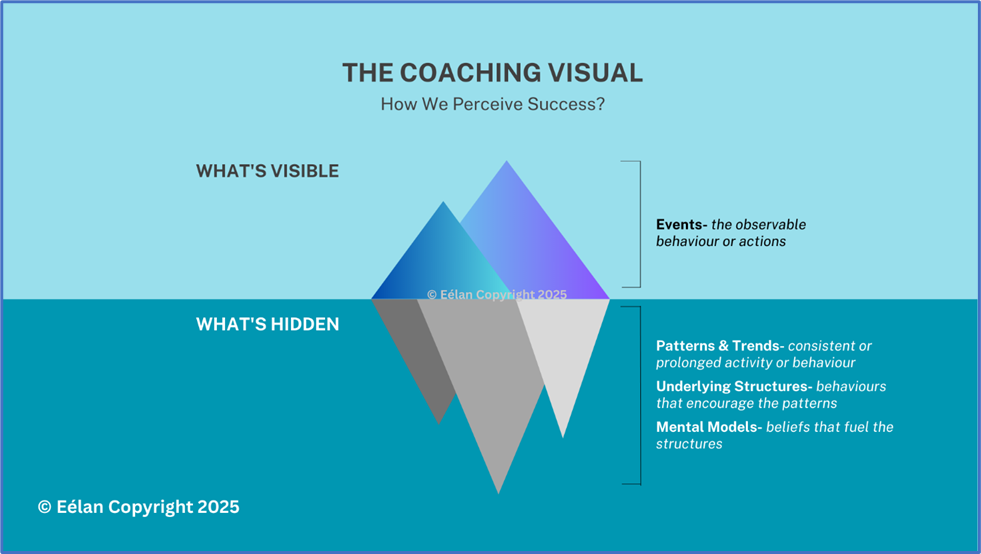
When you’re in the middle of executing, you’re too close to see patterns, biases, or blind spots clearly.
You might think you’re communicating well — but your team hears something different.
You might believe you’re delegating effectively — but you’re actually micromanaging.
You might assume you’re strategic — but you’re stuck in tactical mode.
The gap: What you think you’re doing vs. what’s actually happening.
2. Observe Your Own Mental Patterns
Your mind operates on autopilot more than you realise.
- The way you frame problems
- The assumptions you make about people
- The stories you tell yourself about success and failure
- The triggers that activate stress, defensiveness, or withdrawal
These patterns shape every decision you make, every conversation you have, every outcome you create. But you can’t see them from the inside.
3. Regulate Your Emotional Upheaval
Leadership is emotionally demanding.
High-stakes decisions. Difficult conversations. Uncertainty. Pressure to perform. Conflicting priorities. Stakeholder expectations.
And when emotions run high — frustration, overwhelm, self-doubt, fear — the ability to think clearly, act strategically, and lead effectively can get compromised.
The problem: In the heat of the moment, it gets difficult to catch yourself and self-regulate, until you have intentionally built that muscle by working with someone who can hold a neutral space and cocreate ways to process, reframe, and respond from a grounded place.
4. Know What’s Standing in Your Way
There’s a gap between where you are and where you want to be. You know it’s there. But you can’t always put a finger on what’s holding you back.
- Is it a skill gap? A mindset issue? A blind spot in how you show up?
- Is it your strategy? Your communication? Your energy management?
- Is it internal (limiting beliefs, fear of failure) or external (organisational dynamics, lack of resources)?
Even if you notice something’s off, leaders don’t always know how to get over it.
The Cost of Trying To Fix It
When leaders don’t have an external perspective and rely solely on self-assessment and self-correction, a predictable pattern emerges:
Somewhere along the way, they keep doing what they have done in the past and stop improving.
They plateau. They become complacent. Their growth stagnates.
And by the time they realise it, they’ve lost months — sometimes years — of potential progress.
Worse, the gap between where they are and where they could be starts to widen. Competitors catch up. Opportunities pass them by. The next promotion goes to someone else.
And the response? Often, it’s to work harder.
But working harder without greater awareness doesn’t lead to a breakthrough. It leads to burnout.
What Great Coaches Bring to Light
Books, courses, and knowledge can teach you what to do. But they can’t help you see the ‘how’ — how you actually show up, how your patterns sabotage you, how small shifts in behaviour create exponential impact.
That’s where coaching becomes irreplaceable. Coaches Become Your External Eyes and Ears
They enable you to see a more accurate picture of your reality than you can see on your own.
They notice and share, not conclude:
- The gaps between what you intend and what others experience
- The patterns you repeat across different situations
- The moments where you hold back or overcompensate
- The blind spots that limit your effectiveness
Coaches Hold the Mirror, which shows the Fundamentals You’ve Left Behind
As you advance in your career, you often abandon the basics — the fundamentals that made you effective in the first place.
- Clear communication becomes jargon-filled.
- Active listening becomes assumption-making.
- Strategic thinking becomes reactive firefighting.
Coaches hold the space where you come back to what works — not in a simplistic way, but at a much higher level of mastery.
Coaches Help You Redesign Your Actions
They help you see the hidden potential in how you work, think, and lead.
Then they help you build new capabilities:
- More effective communication
- Stronger executive presence
- Better decision-making under uncertainty
- Deeper self-awareness and emotional regulation
- Greater strategic clarity and influence
They work with you inside out to Track Where You Are, Where You Want to Be, and Where You Can Reach
Coaching isn’t about fixing problems. It’s about accelerating growth.
An experienced and credentialed coach enables you to:
- Set ambitious but achievable goals
- Identify the leverage points for maximum impact
- Build accountability structures that keep you moving forward
- Measure progress in meaningful ways (not just activity, but outcomes)
- Adjust your approach as you learn and grow
And they do all of this in partnership with you — not telling you what to do, but helping you discover what’s possible.
It Takes Courage to Be Coached
Let’s be honest: coaching isn’t comfortable.
It requires vulnerability. You have to be open to being observed — to having someone see not just your strengths, but your struggles.
Working on yourself can be overwhelming. Sometimes it’s painful. You might uncover things about yourself you didn’t want to face. You might realise how much time you’ve wasted operating in ways that don’t serve you.
And here’s the hard part: at times, it feels like nothing is happening. Progress isn’t always linear. Sometimes, you may feel worse before you feel better — like the discomfort of sore muscles after a hard workout.
Navigating these moments alone can be really challenging.
But navigating them in partnership with a coach can be profoundly beneficial.
Because on the other side of that discomfort? That’s where the next leap of success lives.
The Choice: The Old Way or the Smarter Way?
So, here’s the question: Are you choosing the old, all-by-yourself way? Or the smarter way to grow and succeed?
The Old Way:
- Figure it out alone
- Rely on self-assessment (and hope your blind spots don’t derail you)
- Keep doing what’s worked before (and hope it keeps working)
- Push harder when things aren’t working (and risk burnout)
- Wait until a crisis forces change
The Smarter Way:
- Partner with a coach who sees what you can’t
- Get real-time feedback and strategic guidance
- Build new capabilities intentionally, not accidentally
- Navigate challenges before they become crises
- Accelerate your growth instead of hoping for it
The reality is this: Most leaders who reach the top didn’t do it alone. They had coaches, mentors, and trusted advisors who helped them see further, think clearly, and perform better.
Coaching in Action: What It Actually Looks Like
For Individual Leaders:
Clarity on blind spots
Your coach notices the patterns you can’t see — and helps you understand how they’re limiting you.
Strategic perspective
When you’re stuck in the weeds, your coach helps you zoom out and see the bigger picture.
Emotional regulation
In high-pressure moments, your coach provides a sounding board to process emotions, reframe challenges, and respond strategically.
Accountability
Your coach keeps you honest. They track your commitments, celebrate your progress, and call you out when you’re drifting.
Skill-building in real-time
Coaching isn’t theoretical. You work on actual challenges you’re facing — with tools, frameworks, and feedback you can apply immediately.
Reflection Questions for Leaders
As you think about your own growth and the next level of success you’re aiming for, ask yourself:
- When was the last time I received honest, unfiltered feedback about how I show up? Not performance review feedback — but real insight into my blind spots?
- Am I stuck in patterns I can’t see? Do I keep running into the same challenges (difficult conversations, delegation struggles, decision-making paralysis) without understanding why?
- Am I working harder but not getting better? Am I doing more, but not achieving the breakthrough I’m after?
- What’s the cost of NOT having an external perspective? Even if I am doing great, what future opportunities am I missing? What limited perspective am I repeating? How much time am I spending figuring things out the hard way?
- If I knew that coaching could accelerate my next leap of success, what’s stopping me from exploring it? Is it ego? Fear? Uncertainty about what coaching even is?
What Coaching Enables
Let’s return to the quote that opened this article:
“It’s not how good you are doing now. It’s how good you are going to be that really matters.” — Atul Gawande
Coaching isn’t about fixing what’s broken. It’s about unlocking what’s possible.
It’s about:
- Moving from competent to exceptional
- From good performance to sustained excellence
- From reacting to leading
- From working hard to working smart
And it’s about doing all of this faster, with less trial and error, and with someone in your corner who’s fully invested in your success.
Ready to Choose the Smarter Way?
If you’re a professional who’s ready to stop plateauing and start accelerating — if you’re done with the “figure it out alone” approach and ready for strategic partnership — executive coaching might be exactly what you need.
We work with senior leaders, high-potential professionals, and ambitious experts who are ready to:
- Identify and address blind spots
- Build new leadership capabilities
- Navigate transitions and complexity
- Accelerate their impact and influence
- Achieve the next leap of success
Let’s talk about how coaching can help you get from where you are to where you want to be — faster, smarter, and with greater clarity than you thought possible.
Schedule a Confidential Discovery Call
Explore Our Executive Coaching Services
About the Author:
Shivaani Talesra is an ICF PCC and EMCC Senior Practitioner with expertise as an Executive & Leadership Coach, Senior Trainer & Facilitator, and HR/OD Consultant specialising in leadership growth, transition and presence, conflict resolution, and helping leaders navigate complex interpersonal dynamics. With 20+ years of senior leadership experience, she helps executives build the inner clarity and emotional regulation needed to lead through conflict effectively.
Key Takeaways
- Expertise doesn’t eliminate the need for coaching — it magnifies it
- Four blind spots experts can’t see: mistakes, mental patterns, emotional upheaval, hidden barriers.
- Coaches provide external eyes, recognise fundamentals, break down actions, and track growth.
- Coaching requires courage — but the discomfort leads to a breakthrough.
- The choice: Go it alone and plateau, or partner with a coach and accelerate
Word Count: ~2,200 words
Reading Time: 9 minutes