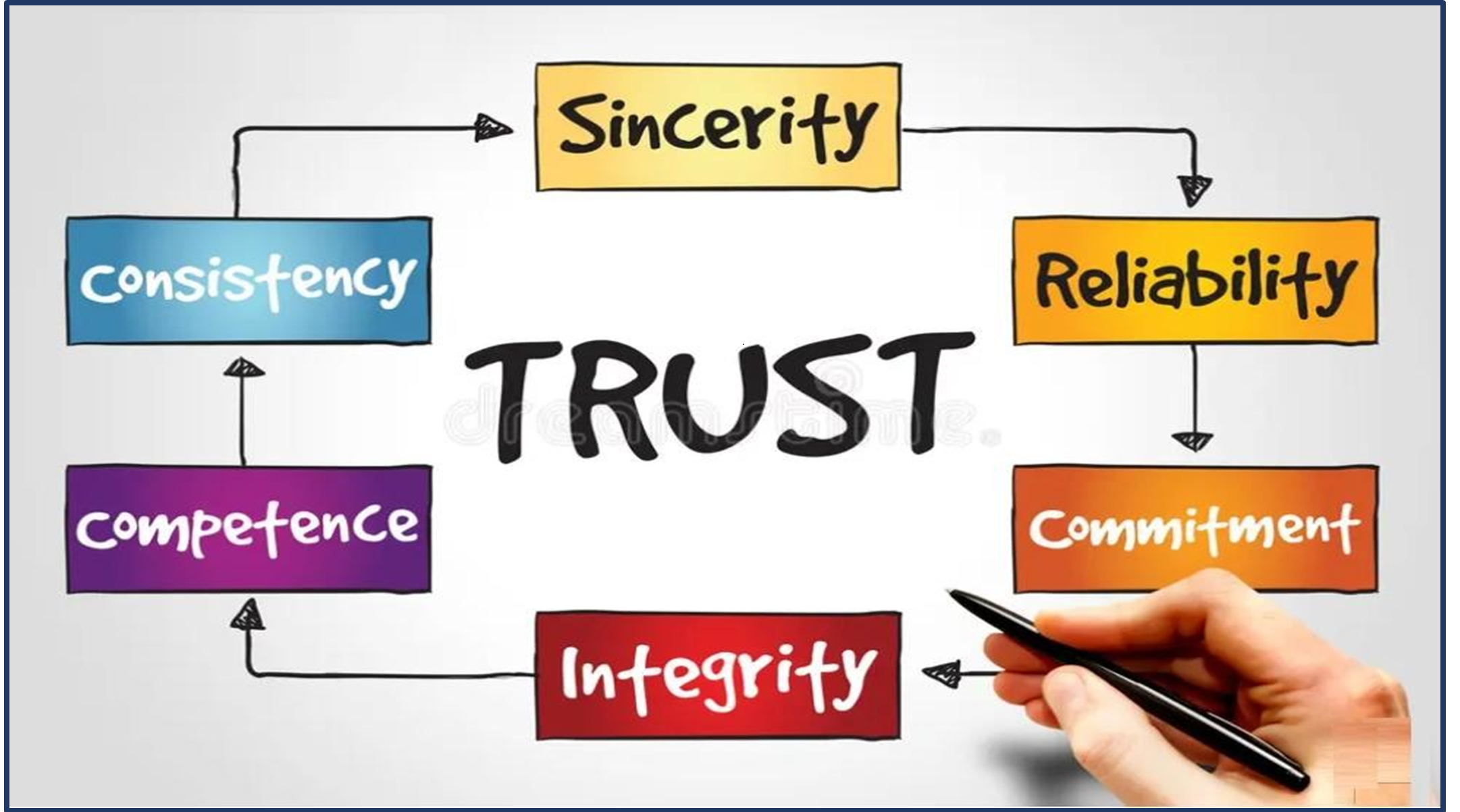
The Real Test of Commitment
Commitment is not just what you do to show others you’re dedicated. It’s what you do when nobody is watching.
It’s easy to speak boldly about intentions, to craft compelling vision statements, and to rally teams around ambitious goals. But true commitment reveals itself in the quiet moments — the decisions you make when no one’s tracking your every move, the consistency you maintain when motivation wanes, and the integrity you uphold when it would be easier to cut corners.
As leaders, we often focus on building commitment within our teams. We measure engagement scores, track productivity metrics, and design incentive structures. But what we often miss: commitment without trust is just compliance in disguise. And compliance doesn’t drive innovation, resilience, or sustainable high performance.
When Trust Breaks: The Uber Case Study
In 2017, Uber faced a moment of reckoning. The company, once celebrated as a disruptor redefining urban transportation, found itself in crisis — not because of market forces or competitive pressure, but because of deep, self-inflicted cultural wounds.
Uber drivers were on strike. An “us versus them” mentality had poisoned relationships across the organization. Employees and stakeholders alike were skeptical about getting the full story from leadership. The relentless focus on “growth at all costs” had come at the expense of trust — with drivers, employees, regulators, and the public.
The response? “A Campaign to Rebuild Trust.”
But here’s the critical question: How do you rebuild something as intangible yet vital as trust?
The answer lies in understanding what trust is actually made of.
The Three Drivers of Trust
Research shows that trust has three core drivers: authenticity, logic, and empathy.
When trust breaks down, it can almost always be traced back to a failure in one (or more) of these dimensions:
- Authenticity — Are you showing up as your true self?
Leaders who withhold their true selves — who hide behind corporate speak, avoid vulnerability, or project a persona that doesn’t match their values — create distance. People sense inauthenticity, even if they can’t articulate it. And distance breeds’ doubt.
The cost: When leaders aren’t genuine, teams question their motives. Are they really invested? Do they mean what they say? Can I trust them when things get hard?
- Logic — Do your decisions make sense?
Trust requires competence. Even the most well-intentioned leader will lose credibility if their decisions consistently lack sound reasoning, data, or strategic clarity. People need to believe you know what you’re doing.
The cost: When logic wobbles, teams second-guess every decision. “Did they think this through?” “Is there a plan, or are we just winging it?” Uncertainty erodes confidence.
- Empathy — Do you genuinely care?
Trust isn’t built on competence alone. It requires a connection. Leaders who fail to demonstrate empathy — who dismiss concerns, ignore emotional realities, or prioritize results over people — may achieve short-term wins but will struggle to sustain commitment long-term.
The cost: When empathy is missing, people feel like transactions, not humans. They show up, but they don’t invest. They comply, but they don’t commit.
Diagnosing Your “Trust Wobble”
Here’s the uncomfortable truth: most leaders have a trust wobble.
It’s rarely intentional. You don’t wake up thinking, “Today, I’m going to undermine trust.” But the information (or misinformation) you broadcast through your words, actions, and patterns — often unconsciously — can erode the very foundation of trust you’re trying to build.
So how do you identify where you wobble?
Check on These Two Dimensions:
- Are you withholding your true self?
Many leaders believe that “being professional” means hiding doubts, suppressing emotions, or projecting confidence even when they’re uncertain. But this often backfires.
When you withhold your humanity, you create a trust ceiling. People can sense when something’s off. They wonder: “What aren’t they telling us?” or “Do they actually believe what they’re saying?”
What to do:
- Take ownership when you don’t have all the answers. Say, “I don’t know yet, but here’s how we’ll figure it out.”
- Share your thinking process, not just your conclusions. Let people see the logic behind your decisions.
- Acknowledge when you’ve made a mistake. Apologizing and course-correcting builds more trust than pretending you’re infallible.
- Are you ignoring your wobble patterns?
Your trust wobble isn’t random — it follows patterns. And those patterns often vary based on context.
For example:
- Do you wobble on authenticity with your direct reports but on empathy with senior leadership?
- Are you more logical and decisive under normal conditions but lose clarity under stress?
- Do you show up differently with peers than with people who have authority over you?
What to do:
Stand back and analyze your behavior across multiple interactions. Pick 3-4 recent situations that didn’t go as smoothly as you’d hoped. Ask yourself:
- Which trust driver did I wobble on?
- Is there a pattern? Does it show up more with certain stakeholders or in specific situations
- What triggers this wobble?
Pro tip: About 20% of self-assessments need revision. We’re notoriously bad at seeing our own blind spots. Work with an unbiased partner — a trusted peer, mentor, or executive coach — who can give you honest, specific feedback.
The Power of Owning Your Wobble
Here’s what’s counterintuitive but true: when you take responsibility for your trust wobble, you actually strengthen trust.
Why? Because owning a wobble demonstrates:
- Authenticity — You’re being real about your limitations
- Logic — You’re self-aware enough to recognize patterns and address them
- Empathy — You’re showing commitment to the relationship by doing the work to improve
Let me give you an example.
Imagine a leader who realizes they’ve been withholding critical information from their team because they didn’t want to “worry them” during a tough period. Instead of continuing the pattern, they call a meeting and say:
“I realize I have been a bit less transparent recently. I thought I was protecting you from stress, but I see now that it has created uncertainty and may even be eroding trust. Here’s what’s actually happening, here’s what we’re doing about it, and moving forward, I’m committed to being more open — even when the news isn’t easy.”
That moment — that honest acknowledgement — does more to rebuild trust than months of “everything is fine” messaging ever could.
From Commitment to True Leadership
Leadership begins not only when others trust you, but when you trust yourself.
And that self-trust is reflected in how your team shows up. When you lead with authenticity, logic, and empathy, your team doesn’t just comply — they commit. They take ownership. They bring their full selves to the work.
But when trust wobbles go unaddressed, commitment becomes shallow. People do what’s asked, but no more. They protect themselves rather than invest themselves. And over time, that disengagement costs you everything: innovation, resilience, retention, and results.
Reflection Questions for Leaders
As you think about your own leadership and the trust you’re building (or rebuilding) with your team, ask yourself:
- Which trust driver do I wobble on most? Authenticity? Logic? Empathy?
- Does my wobble pattern change based on context? (e.g., Do I show up differently with my team vs. my boss?)
- What would it take for me to own my wobble openly? Who could help me see my blind spots more clearly?
- If I’m honest, where have I been withholding my true self? What am I protecting by not being my authentic self?
- Am I treating trust as a “nice to have” or as the foundation of everything I’m trying to build?
The Path Forward: Coaching as Your Trust Mirror
One of the biggest challenges in addressing trust wobbles is that we can’t see them clearly on our own. We justify our behaviors, rationalize our choices, and miss the subtle patterns that others notice immediately.
This is where executive coaching becomes invaluable.
A skilled coach acts as your external eyes and ears — providing an accurate picture of your reality, recognizing the fundamentals you may have left behind, and helping you build trust at a much higher level.
Coaching helps you:
- Identify your specific trust wobble
- Understand the patterns and triggers that activate it
- Develop strategies to address it in real-time
- Practice new behaviors in a safe, confidential space
- Track your progress as trust rebuilds within your team
Because here’s the truth: It can be tough to coach yourself out of a blind spot. But with the right partnership, you can transform trust from a vague aspiration into a tangible, measurable leadership capability.
Ready to Build Trust That Lasts?
If you’re a senior leader navigating complexity, leading through change, or rebuilding trust within your team, you don’t have to figure it out alone.
Executive coaching provides the clarity, accountability, and strategic support you need to lead with authenticity, logic, and empathy — even in the hardest moments.
Let’s talk about how coaching can help you strengthen trust, deepen commitment, and unlock your team’s full potential.
Schedule a Confidential Discovery Call
Explore Our Executive Coaching Services
About the Author:
Shivaani Talesra is an ICF PCC and EMCC Senior Practitioner with expertise as an Executive & Leadership Coach, Senior Trainer & Facilitator, and HR/OD Consultant specializing in leadership growth, transition and presence, conflict resolution, and helping leaders navigate complex interpersonal dynamics. With 20+ years of senior leadership experience, she helps executives build the inner clarity and emotional regulation needed to lead through conflict effectively.
Key Takeaways
- Commitment without trust is just compliance
- Trust has three drivers: authenticity, logic, and empathy
- Most leaders have a “trust wobble” — identifying yours is the first step
- Owning your wobble actually strengthens trust
- Executive coaching provides the external perspective needed to see and address blind spots
Related Blogs
- The 1000-Layer Growth Ladder: A Coaching Movement That Shifted Everything

- Why Every Expert Needs a Coach: The Hidden Barrier to Peak Performance
- “It’s Faster If I Just Do It Myself” — Why Senior Leaders Struggle to Delegate.

- Conflict to Create or Conflict to Protect? The Inner Work of Leadership
- Surplus Struggling, Deficit Disinterested: The Leadership Gap No One’s Talking About