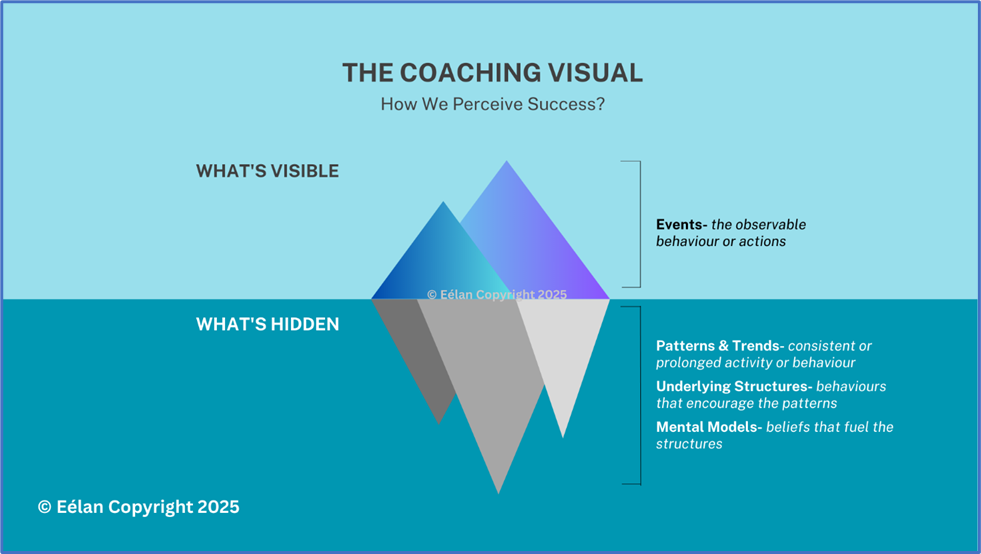

It isn’t about laziness or lack of trust. It’s about the invisible psychological barriers leaders carry.
OCTOBER 21, 2025 BY SHIVAANI TALESRA
Even Senior Leaders Say This
“It’s faster if I just do it myself.”
If you’ve ever thought this — or said it out loud — you’re not alone.
Even the most experienced, capable leaders struggle with delegation. They know they should delegate more. They’ve read the books, attended the workshops, and understand the theory.
But when it comes to actually letting go? Something holds them back.
And it’s rarely what they think it is.
The Real Problem Isn’t What You Think
Here’s what most people assume about leaders who don’t delegate:
- They’re control freaks
- They don’t trust their teams
- They’re bad at prioritising
- They don’t know how to let go
But research tells a different story.
A Harvard Business Review study (2016) found that leaders who resist delegation often do so not from a lack of competence in their teams, but from fears around control, reputation, and identity.
Read that again.
It’s not that your team can’t handle it. It’s that you’re carrying invisible psychological barriers that make letting go feel risky, uncomfortable, or threatening.
And until you identify and address those barriers, no amount of time management training or delegation frameworks will stick.
The Five Psychological Barriers to Delegation
In my facilitation and coaching sessions with senior leaders, I see these five barriers show up repeatedly — often unconsciously. Let’s unpack each one.
1. Fear of Losing Control
The internal dialogue:
“If I don’t oversee this, things will fall apart. And I’ll be the one answering for it.”
This barrier shows up when leaders believe that their involvement is what keeps things running smoothly.
They worry:
- Quality will drop if they’re not watching
- Mistakes will happen that could have been prevented
- The team will go in the wrong direction without their guidance
The truth beneath the fear:
Often, this isn’t really about the team’s capability. It’s about the leader’s need for certainty in an uncertain world. Control feels like safety.
The cost:
When you can’t let go of control, you become the bottleneck. Decisions wait for you. Innovation slows because people stop taking initiative. And your team learns to be dependent, not empowered.
Real example:
A Director of Operations once told me: “I review every report before it goes to the executive team because I can’t risk errors reaching senior leadership.”
What they didn’t realise: Their team had stopped proofreading their own work carefully because they knew, boss would catch everything. The leaders’ “quality control” was actually creating the very dependency they feared.
2. Lack of Trust in Team Capability
The internal dialogue:
“They don’t yet have the skills to deliver at the level I expect.”
This barrier shows up when leaders genuinely believe their team isn’t ready — so they hold onto tasks longer than necessary.
But here’s the uncomfortable truth: Your team will never develop the skills if you don’t give them the opportunity to build them.
The paradox:
You can’t delegate until they’re capable. But they can’t become capable until you delegate.
The cost:
Your team stays stuck at their current capability level. High performers get bored and leave—development stalls. And you remain overworked because no one else can do what you do.
Real example:
A VP of Marketing kept rewriting their team’s campaign briefs because “they’re not strategic enough yet.”
When we dug deeper into coaching, they realised they had never actually taught them what “strategic” meant. They expected them to understand — and then judged them for not meeting invisible standards.
Once they started coaching the team through the work instead of doing it for them, the team’s capability grew exponentially.
3. Perfectionism
The internal dialogue:
“No one can do it the way I would.”
This is one of the most common — and most limiting — barriers.
Perfectionists don’t just want things done well. They want things done their way. And if it doesn’t meet their exact standard, it feels like failure.
The truth beneath the perfectionism:
This is often rooted in self-worth. If the work isn’t perfect, it reflects poorly on you. Your value feels tied to flawless execution.
The cost:
You spend hours polishing work that’s already “good enough.” You redo things your team has done, signalling that their best isn’t acceptable. Morale drops. Innovation dies because people stop trying anything new (it won’t be perfect anyway).
Real example:
A CFO once spent 3 hours reformatting a financial presentation that was already clear and accurate — because the font choices and slide transitions didn’t match their aesthetic.
When I asked, “Did the changes improve the message or just the appearance?” they paused. Then said, “Honestly? Just the appearance. But it bothered me.”
That’s perfectionism. And it’s costing you strategic thinking time.
4. Fear of Being Replaced
The internal dialogue:
“If they become too capable, where’s my value?”
This is the barrier leaders are least likely to admit — even to themselves.
But it’s real. And it’s deeply human.
When you’ve built your career on being the person who knows how to do the thing, letting others develop that same expertise can feel threatening.
The fear beneath the fear:
“If I’m not the expert anymore, what’s my role? Will I still be needed?”
The truth:
Your value as a leader isn’t in hoarding expertise. It’s in creating the conditions where others thrive.
When you develop capable leaders below you, you don’t become obsolete. You become promotable.
The cost:
You create a talent bottleneck. Succession planning fails because no one else can do your job. You can’t take on bigger roles because you’re irreplaceable in your current one. And ironically, that “irreplaceability” traps you.
Real example:
A VP once told me: “If I teach my team everything I know, what’s left for me to do?”
I asked: “What does the CEO expect from you? Technical execution or strategic leadership?”
Long pause. Then: “Oh. I’ve been doing the wrong job.”
5. Enjoyment of the Work
The internal dialogue:
“I actually like doing this task, even if it’s not the best use of my time.”
This one surprises people. But it’s more common than you think.
Leaders hold onto work because it’s comfortable. It’s something they’re good at. It gives them a sense of accomplishment and control in a role that otherwise feels ambiguous and high-pressure.
The comfort trap:
Tactical work feels productive. Strategic work — thinking, planning, coaching — can feel fuzzy and uncertain. So, you often gravitate toward what gives you immediate satisfaction.
The cost:
Your calendar fills with tasks that shouldn’t be there. You have no time for strategic thinking, relationship-building, or leadership development. And when asked, “What did you accomplish this week?” you list activities, not impact.
Real example:
A Senior Director admitted, “I still write the monthly reports myself because I enjoy it. It’s the one thing I can finish in a day and feel accomplished.”
But those reports? A junior analyst could do them in half the time. And their real job — building partnerships with key stakeholders — was getting neglected.
Enjoyment is not a good reason to hold onto work that someone else should be doing.
The Cost of Not Delegating
Let’s be honest about what’s at stake when leaders don’t delegate effectively.
Personal Cost:
- Burnout — You’re working a 60-70-hour week because you’re doing two jobs: yours and the one you should have delegated
- No strategic thinking time — Your calendar is packed with tactical execution, leaving no space for vision, planning, or innovation
- Work-life imbalance — You miss family dinners, skip vacations, and feel perpetually behind
Team Cost:
- Disengagement — Your team feels underutilised and undervalued. High performers leave because they’re not growing.
- Dependency culture — People stop taking initiative because they’ve learned that you’ll swoop in and do it anyway
- No development pipeline — No one is being prepared for the next level because you’re not giving them stretch opportunities
Organisational Cost:
- Bottlenecks — Decisions wait for you. Projects stall. The organisation moves more slowly than its competitors.
- Leadership pipeline gaps — When you finally get promoted (or leave), there’s no one ready to step into your role
- Reduced innovation — When the leader does all the thinking, the team stops thinking
The harsh reality: Not delegating doesn’t just hurt you. It hurts everyone around you.
The 5Q Delegation Test
In a recent 2-day leadership program I facilitated, I designed a framework to help senior leaders cut through excuses and reframe delegation as a growth multiplier, not a risk.
I call it the 5Q Delegation Test. These five questions help you assess whether you’re truly unable to delegate — or whether you’re holding on for psychological reasons.
Question 1: Clarity of Value
Do you know what to delegate, why it matters, and why this person is the right choice?
Most leaders delegate tasks without delegating context.
They say, “Can you handle this report?”
But they don’t explain:
- Why this report matters
- What decision will it inform
- What “good” looks like
- Why this person is being given the opportunity
Without clarity, delegation feels risky — because you haven’t set the other person up for success.
Try this:
Before delegating, ask yourself:
- What outcome am I delegating toward?
- What does this person need to know to succeed?
- What authority are they being given?
What shifts:
When you delegate with clarity, the other person feels trusted, not dumped on. And you feel confident they understand what success looks like.
Question 2: Productivity Triggers
Are you delegating to free yourself for higher-value work — or holding on because it gives you a personal sense of productivity?
Many leaders confuse being busy with being effective.
You feel productive when:
- Your inbox is at zero
- Your slides are perfect
- Your report is polished
But is that leadership work? Or is it work you’re comfortable doing because it feels like progress?
The uncomfortable truth:
Strategic work — thinking, planning, coaching, building relationships — doesn’t always feel productive in the moment. It’s ambiguous. You can’t check it off a list.
So, leaders gravitate toward tactical work because it gives them a dopamine hit of “done.”
Try this:
List everything on your calendar this week. Highlight what only you can do — the work that requires your unique authority, relationships, or strategic perspective.
Everything else? That’s your delegation pipeline.
What shifts:
You start measuring productivity by impact, not activity. And you create space for the work that truly moves the needle.
Question 3: Leadership Intent
Do you want to be seen as the leader who helps — or the leader who empowers growth?
There’s a difference between being helpful and being empowering.
Helpful leaders:
- Jump in to solve problems when the team struggles
- Give answers quickly to keep things moving
- Take pride in being needed
Empowering leaders:
- Coach their team to solve problems themselves
- Ask questions that build capability
- Take pride in developing others
Both feel good in the moment. But only one creates sustainable impact.
Try this:
Next time someone comes to you with a problem, resist the urge to solve it. Instead, ask:
- “What have you already tried?”
- “What are two options you’re considering?”
- “If I weren’t here, how would you handle this?”
What shifts:
Your team stops seeing you as the answer machine. They start building problem-solving muscle. And you stop being the bottleneck.
Question 4: Strategic Focus
What expectations from senior stakeholders or clients keep pulling you back into the tactical grind?
This question uncovers something critical:
Sometimes, leaders don’t delegate because they’re responding to real or perceived pressure from above.
You think:
- “The CEO expects me to be hands-on.”
- “Our clients want to see me personally involved.”
- “If I delegate this, people will think I’m checked out.”
And, often, these are assumptions — not reality.
Try this:
Have an honest conversation with your boss or key stakeholders. Ask:
- “What do you actually need from me at this level?”
- “Where do you expect me to be hands-on vs. empowering others?”
- “What does success look like in my role?”
You might be surprised. The CEO doesn’t expect you to review every slide deck. They expect you to build a team that doesn’t need you to review every slide deck.
What shifts:
You stop performing an imaginary job and start doing the actual job your role requires.
Question 5: Redefining “Real Work”
At your level, what qualifies as real leadership work — and does your calendar reflect it?
This is the question that stops leaders in their tracks.
Because the answer is usually:
“Real leadership work is vision, strategy, people development, stakeholder relationships… but my calendar is full of meetings, emails, and execution tasks.”
The gap between what you should be doing and what you actually do is your delegation opportunity.
Try this:
Audit your calendar for the past month. Categorise every block of time:
- Strategic (vision, planning, innovation)
- Relational (coaching, stakeholder engagement, culture-building)
- Tactical (execution, admin, tasks someone else could do)
If more than 40% of your time is tactical, you have a delegation problem.
What shifts:
You start protecting time for leadership work. You ruthlessly delegate or eliminate tactical work. And your impact multiplies.
Real-World Example: Arav’s Transformation
Let me share a real story (name changed for confidentiality).
Meet Arav, a VP of Engineering at a fast-growing tech company.
Arav prided himself on “knowing every line of code.” He reviewed every major commit. He joined every technical design meeting. He debugged critical issues personally — often late at night.
He worked 70-hour weeks. His team waited for him to review everything. Innovation slowed because decisions bottlenecked at his desk.
On the surface, it looked like dedication. Underneath, it was fear.
During our executive coaching engagement, we used the 5Q Delegation Test.
Question 4 hit hard: “What expectations from senior stakeholders keep pulling you back into the tactical grind?”
Arav paused. Then admitted, “I think the CEO expects me to be technical. That’s why I got promoted — I was the best engineer.”
I asked: “Have you checked? Or is that an assumption?”
We set up a conversation with the CEO. And Arav asked directly: “What do you need from me at this level?”
The CEO’s response shocked him:
“Arav, I don’t need you to write code. I need you to build a world-class engineering team. I need you to attract top talent, develop future leaders, and ensure we can scale without you being the bottleneck. If you’re still debugging at 11 PM, you’re not doing your job.”
That conversation changed everything.
Within 3 months:
- Arav delegated 60% of technical reviews to senior engineers
- He freed up 15+ hours per week for strategic planning, hiring, and team development
- Two of his direct reports were promoted to senior roles — proving his value wasn’t in doing the work himself, but in growing leaders who could
- Team velocity improved because decisions no longer waited for Arav’s approval
Arav’s reflection:
“I thought my job was to be the smartest engineer in the room. I learned my job is to make sure I’m not the smartest engineer in the room anymore.” 💡
Why Training Alone Isn’t Enough Sometimes
In leadership development programs, we teach delegation frameworks. We practice difficult conversations. We role-play handoffs. Leaders leave with tools, templates, and confidence. And all these are extremely useful, but sometimes not enough.
Because sometimes here’s what I see: 6 weeks later, many revert to old patterns. Why?
Because delegation isn’t just a skill gap. It’s rooted in deeper beliefs:
- “If I let go, I’ll lose value.”
- “No one cares as much as I do.”
- “Delegation feels like giving up control.”
Training builds awareness. Coaching shifts the mindset.
The Integrated Approach: Training + Coaching
The most effective transformation happens when training and coaching work together.
Through Leadership Development Training:
Organisations can build delegation capability across leadership levels through structured programs:
What training provides:
- Delegation frameworks (what to delegate, when, how)
- Communication skills for clear handoffs
- Tools for setting expectations and providing feedback
- Practice in real-world scenarios with peer support
- Shared language around empowerment vs. micromanagement
Training creates team alignment — everyone learns the same approach, reducing friction and confusion.
Through Executive Coaching:
While training builds the skill, coaching addresses the psychological barriers.
Coaching helps leaders:
- Identify which of the 5 barriers is their barrier (fear of control? perfectionism? enjoyment of the work?)
- Work through the identity shift from “doer” to “enabler”
- Build trust in their team’s capability, even when it’s uncomfortable
- Create sustainable delegation habits that stick long after the training ends
- Navigate the emotional discomfort of letting go
Coaching provides:
- A safe, confidential space to explore fears and doubts
- Real-time support when delegation feels risky
- Accountability to follow through when old patterns resurface
- Tools to regulate the anxiety that comes with releasing control
Why Both Matter:
- Training gives you the “what” and “how”
- Coaching helps you with the “why not” (the internal blocks)
When you combine both, delegation shifts from a technique you know to a leadership behaviour you embody.
Reflection Questions for Leaders
As you think about your own relationship with delegation, ask yourself:
- Which of the 5 psychological barriers resonates most with me?
- If I’m honest, what percentage of my calendar is tactical work that someone else could do?
- What story am I telling myself about why I “have to” stay involved?
- If I freed up 10 hours this week by delegating, what leadership work would I focus on instead
- What would my team say about my delegation style?
Ready to Break the Delegation Pattern?
If you’re a senior leader (or witness leaders in your organisation) who knows you should delegate more — but something keeps holding you back — you’re not alone. And you don’t have to figure it all out by yourself.
For Organisations:
Our leadership development programs equip your teams with proven delegation frameworks, communication strategies, and experiential practice to build confidence and capability.
For Individual or Group Leaders:
Executive coaching/Team coaching provides the personalised, confidential space to identify and work through the psychological barriers that keep you/them stuck — and develop sustainable delegation habits that free leaders to lead at their highest level.
Let’s talk about how we can help you or your leaders shift from being the bottleneck to being the multiplier.
Schedule a Confidential Discovery Call
Explore Our Leadership Development Programs
Learn About Executive Coaching
About the Author:
Shivaani Talesra is an ICF PCC and EMCC Senior Practitioner with expertise as an Executive & Leadership Coach, Senior Trainer & Facilitator, and HR/OD Consultant specialising in leadership effectiveness, delegation, team empowerment, and organisational capability building. With 20+ years of senior leadership experience, she helps executives and organisations shift from doing the work to multiplying impact through others.
Key Takeaways
- Delegation struggles are rarely about team capability — they’re about leaders’ psychological barriers.
- 5 common barriers: Fear of control, lack of trust, perfectionism, fear of being replaced, and enjoyment of the work.
- The cost of not delegating: burnout, team disengagement, organisational bottlenecks.
- The 5Q Delegation Test helps leaders cut through excuses and reframe delegation.
- Training builds delegation skills; coaching shifts the underlying mindset.
- Real transformation happens when both works together.
Word Count: 4,200 words
Reading Time: 16-17 minutes